


Clear structure
Visitors should understand the offer quickly and always know the next useful step.
A strong website development project starts with the business goal, not with a template or a technology choice. We plan structure, mobile usability, content and conversion paths so the result is useful to visitors and ready for search and advertising.
Coordinate website, SEO, advertising, content and measurement around the actions that matter to the business.
Visitors should understand the offer quickly and always know the next useful step.
The experience is planned for phones first, because many commercial searches happen on mobile.
Technical structure, content hierarchy and internal links are considered during development, not added as an afterthought.

We start with what you sell, who should find you and which action matters most.
We define structure, content, visual direction, technical requirements and measurement.
We implement the agreed scope, test it and refine the details with your feedback.
After launch we can continue with SEO, Google Ads, maintenance or content when those activities have a clear purpose.
For Website development, we need the business facts that only the client can confirm: the offer, target customers, priorities, constraints and any existing access or assets. GoldClick can then organise the website copy, visual material and technical implementation within the agreed scope instead of asking the client to prepare technical specifications.
Final scope and price depend on the actual project. We define deliverables before work starts.

A reliable website project starts by defining the role of the site in the business. We clarify which services deserve their own pages, what information a potential client needs before making contact, which actions matter most and whether the site must support advertising, organic search, multilingual content or future expansion.
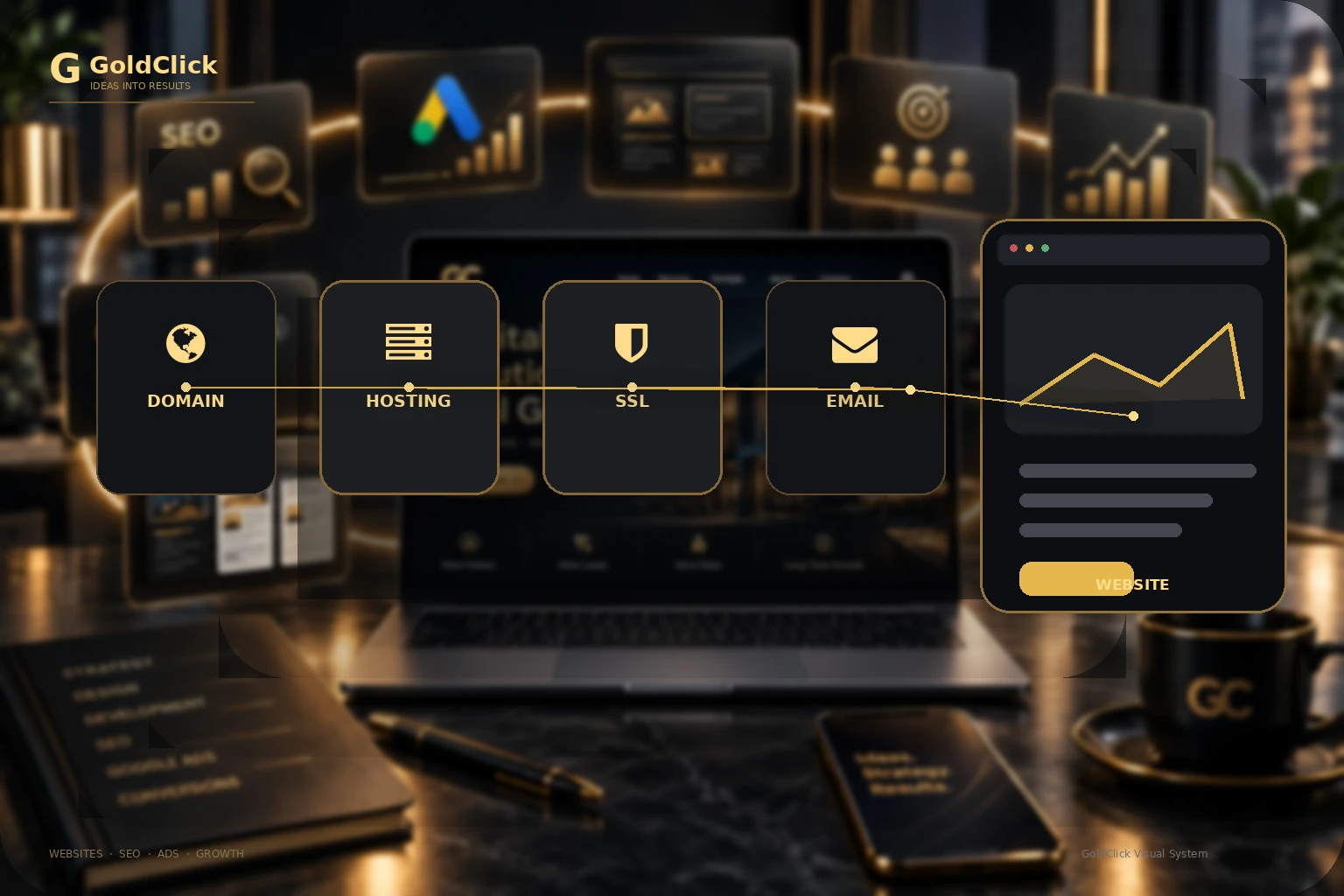
This planning stage also covers ownership of the domain and hosting, access credentials, forms, analytics, content responsibilities and any migration requirements. Making these decisions early prevents a common problem: a visually polished website that becomes difficult to maintain, measure or extend once real business needs appear.
During implementation we check responsive behaviour, navigation, forms, links, images, metadata and page hierarchy as part of the same build process. Performance is considered alongside design, because oversized media, unnecessary scripts and unstable layouts can reduce usability on slower mobile connections.
Before launch we review indexability, canonical URLs, redirects where needed, sitemap coverage and the basic analytics or conversion setup agreed for the project. If an older site is being replaced, URL mapping and 301 redirects are planned before the new version goes live rather than repaired after traffic has already been lost.
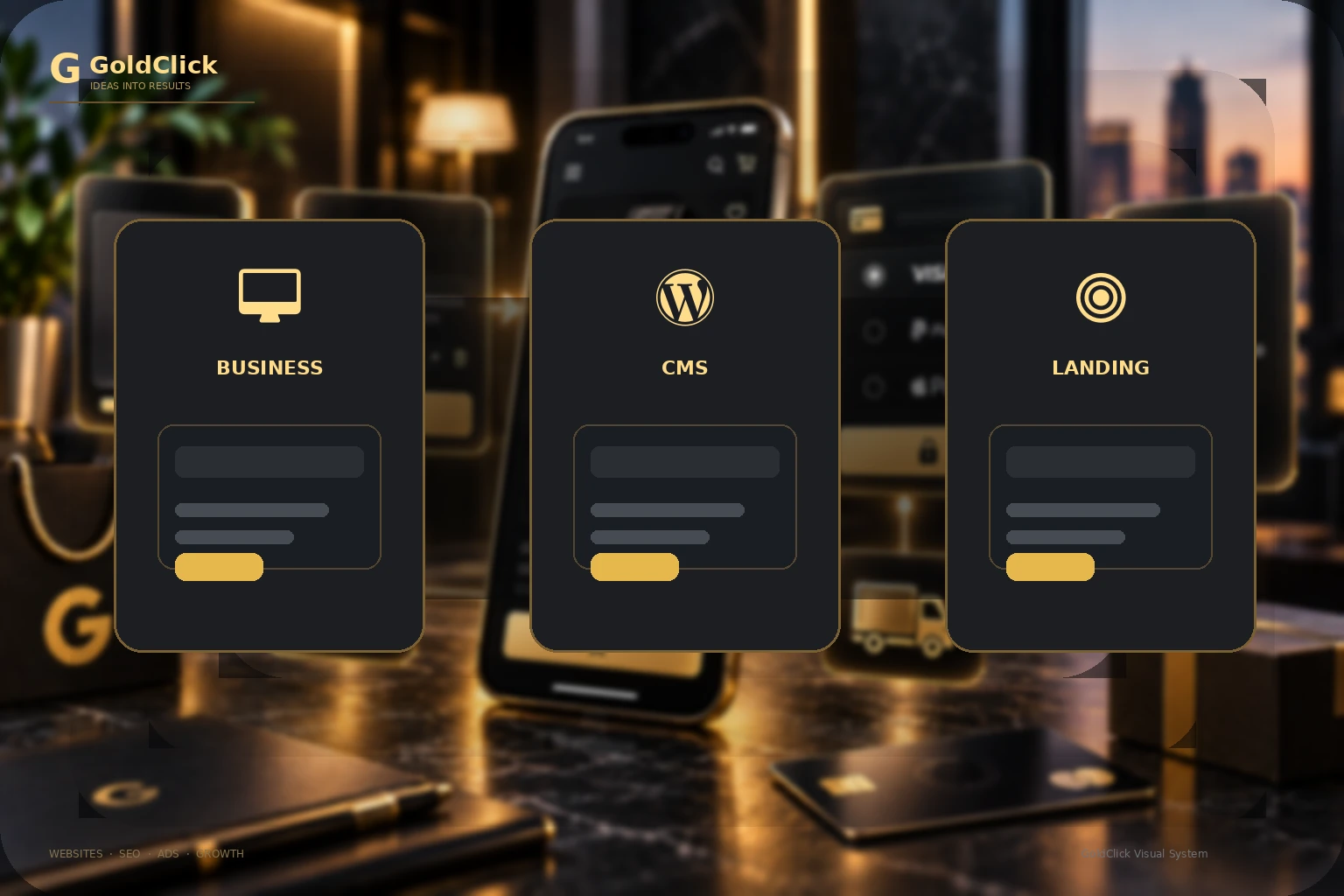
A CMS can be the practical choice when the team needs to edit pages frequently and standard functionality covers the project. Custom development is more appropriate when the website needs specific workflows, integrations, performance constraints or front-end behaviour that would otherwise require many plugins and workarounds.
The decision should follow the operating model of the business, not a technology preference. We look at who will maintain the site, how often content changes, what must integrate with other systems and how the project is expected to grow over time.
Publishing is the start of the operational phase, not the end of the project. Security updates, backups, content changes, SEO work, advertising and new landing pages are separate activities that can be added when they have a clear business reason.
A well-structured build makes those later changes easier. The goal is to avoid a site that has to be rebuilt every time a new service, language, campaign or integration is introduced.
A business website should make the offer understandable before it tries to impress. We identify the services or product groups that deserve their own pages, the questions a potential customer needs answered, the geographical or language requirements and the action that should follow each important visit. That information becomes the site map and content plan before visual details are finalised.
This prevents a common failure: an attractive homepage that carries almost the entire business message while internal pages remain thin. Dedicated, well-structured service pages create clearer user journeys, stronger internal linking and better landing destinations for both organic search and paid campaigns.
Design decisions are stronger when the content is known. Headings, proof points, process explanations, pricing context, FAQs and calls to action all need space and hierarchy. We therefore avoid designing empty containers first and forcing the real business information into them later. The page should still feel spacious, but not at the cost of leaving important questions unanswered.
On mobile, this becomes even more important. Navigation, tap targets, form fields, typography and section order are reviewed for smaller screens instead of treating mobile as a compressed desktop layout. A visitor should be able to understand the service, verify essential details and contact the business without fighting the interface.
A new site should launch with a clean technical foundation: one clear H1, sensible heading hierarchy, descriptive titles and meta descriptions, canonical URLs, crawlable internal links, an XML sitemap and robots rules that match the production environment. Structured data is added only where it corresponds with visible content and the type of business.
If the project replaces an existing website, we also inventory current URLs and organic landing pages. Old addresses that have a relevant new destination receive 301 redirects, internal links are updated, and Search Console is checked after launch. This is far safer than publishing the new site first and trying to reconstruct the old URL map after 404 errors appear.
A CMS is useful when the client needs frequent editorial changes and the required functionality is well served by a maintained platform. Custom development becomes more attractive when the project needs specialised workflows, integrations, unusual front-end behaviour or tighter control over performance than a plugin-heavy solution can reasonably provide.
Neither approach is automatically more professional. The decision should reflect who maintains the site, how often content changes, which integrations are required, what security responsibilities exist and how the business expects the website to grow. We explain those trade-offs before implementation so the technology supports the operating model instead of dictating it.
Contact forms, click-to-call links, email actions and other conversion points are tested across representative devices. Where analytics or advertising measurement is in scope, events are defined before the site goes live so the business does not lose the first weeks of useful data. Thank-you pages and event triggers are checked to avoid missing or double-counting enquiries.
We also review the journey into those actions. A technically working form is not enough if the page never explains what happens after submission, asks for unnecessary information or hides the next step. Conversion work begins with clarity and trust before it becomes an analytics problem.
Images, video, fonts, animation and third-party scripts all have a cost. We optimise media and front-end behaviour so the visual identity remains strong without creating avoidable delays, cumulative layout shifts or heavy mobile pages. Core Web Vitals can provide useful diagnostics, but they are interpreted alongside real page behaviour and business requirements.
The same principle applies to integrations. A feature that adds maintenance risk or large script payloads needs a clear purpose. When simpler implementation delivers the same customer outcome, it is usually the better long-term choice.
After publication, the site needs a defined maintenance model. Backups, software updates, security, hosting, content changes and future landing pages are separate responsibilities that should be understood rather than assumed. We document critical access and avoid leaving the business dependent on undocumented accounts or personal credentials.
A good build makes future work easier. New services, languages, SEO content and campaigns should fit the existing information architecture without forcing a redesign every time the business grows. That maintainability is part of the value of the original development work.
Practical answers to questions that usually affect scope, risk, timing and the decision to start.
For Website development, start with the business goal, target audience, ownership of existing assets and the expected scope. We then translate those requirements into priorities around information architecture, service-page structure and responsive behaviour. Clear inputs reduce rework and make the final scope easier to price and test.
For Website development, the scope follows the actual work required rather than a fixed checklist. We define deliverables, responsibilities, dependencies and acceptance criteria before implementation. Items such as forms and conversion paths, analytics and Search Console or domain, hosting and SSL ownership are included when they are relevant to the project.
There is no universal duration for Website development. Timing depends on the amount of content, technical complexity, access to existing systems, feedback cycles and whether migration or integration work is required. We prefer to define milestones and dependencies instead of promising a date that ignores the real scope.
For Website development, quality control combines functional review with the signals that matter for the project. Depending on the service we may check qualified enquiries, form and phone actions, organic landing-page visibility and related technical conditions. The goal is to find issues before they become expensive after launch.
For Website development, common problems include starting from a template before defining the business goal, hiding important services inside one generic page and launching without redirects or measurement. We try to identify these early, document important decisions and avoid changes that have no clear business or technical reason.
Yes. For Website development, Seo, Google Ads and hosting and maintenance can be planned together, but the primary scope remains clear so one page or project does not try to solve every digital problem at once.
Explore “Web design” when it is the next logical step for the project, with scope and priorities defined around the business goal rather than added as an isolated extra.
Learn more →Explore “Website development” when it is the next logical step for the project, with scope and priorities defined around the business goal rather than added as an isolated extra.
Learn more →Explore “Wordpress website development” when it is the next logical step for the project, with scope and priorities defined around the business goal rather than added as an isolated extra.
Learn more →Explore “E-commerce website development” when it is the next logical step for the project, with scope and priorities defined around the business goal rather than added as an isolated extra.
Learn more →Explore “Seo” when it is the next logical step for the project, with scope and priorities defined around the business goal rather than added as an isolated extra.
Learn more →You do not need to know the technical terminology. Tell us about your business, target customers and goal; we will propose a practical next step.